


Technische Universität München TUM
Winter Semester 2024
In an era fixated on Elon Musk’s lithium-ion panacea, sleek batteries forged from rare metals scraped from the ocean floor or extracted from distant, exploited territories, we’ve neglected a simple fact: everything is energy storage. A suspended volume of water, a coiled spring under tension, a mound of salt, all are reservoirs waiting to be tapped. The goddamn potato on your plate is as much a battery as the high-tech cells we covet.
Renewable energies are deemed unreliable because the wind doesn’t always blow, the sun doesn’t always shine, and when it does, we might find ourselves on the wrong side of the planet or beneath a veil of clouds. As architects, we’ve abdicated part of our role, relegating energy to a peripheral concern addressed by engineers and technocrats. We slap solar panels onto facades, plant greenery on rooftops and congratulate ourselves on sustainability. Energy must be reclaimed as the very bones of our buildings, the typological principle around which design revolves.
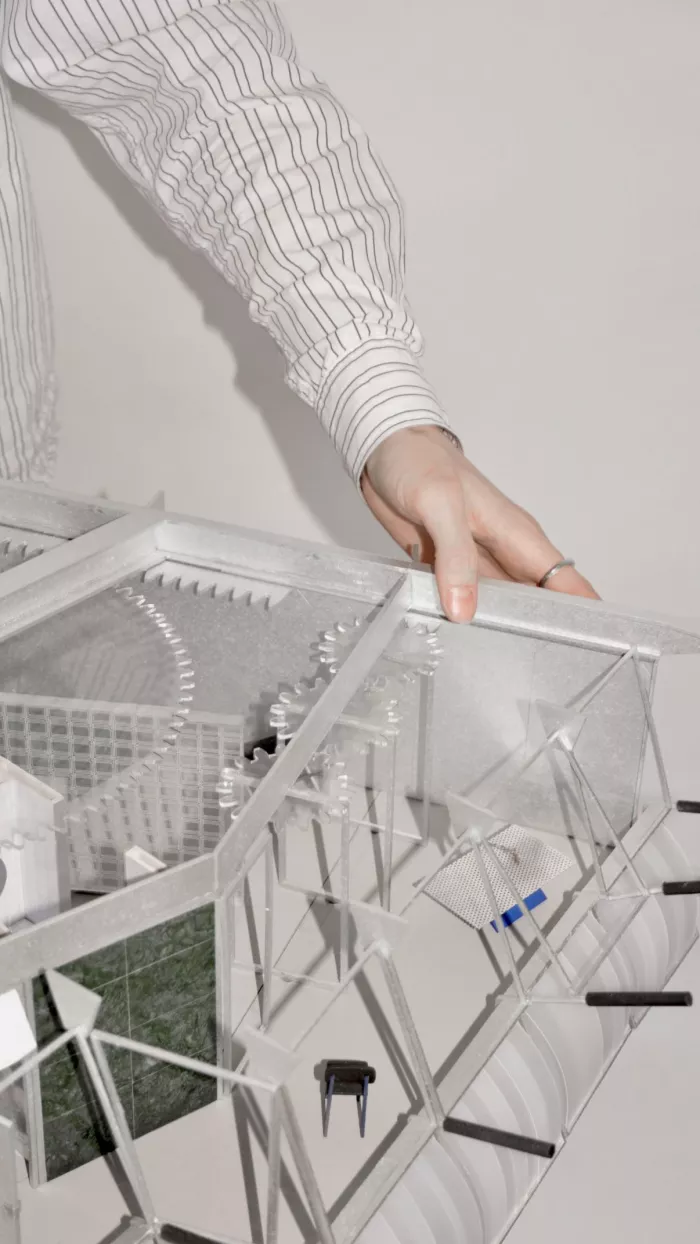
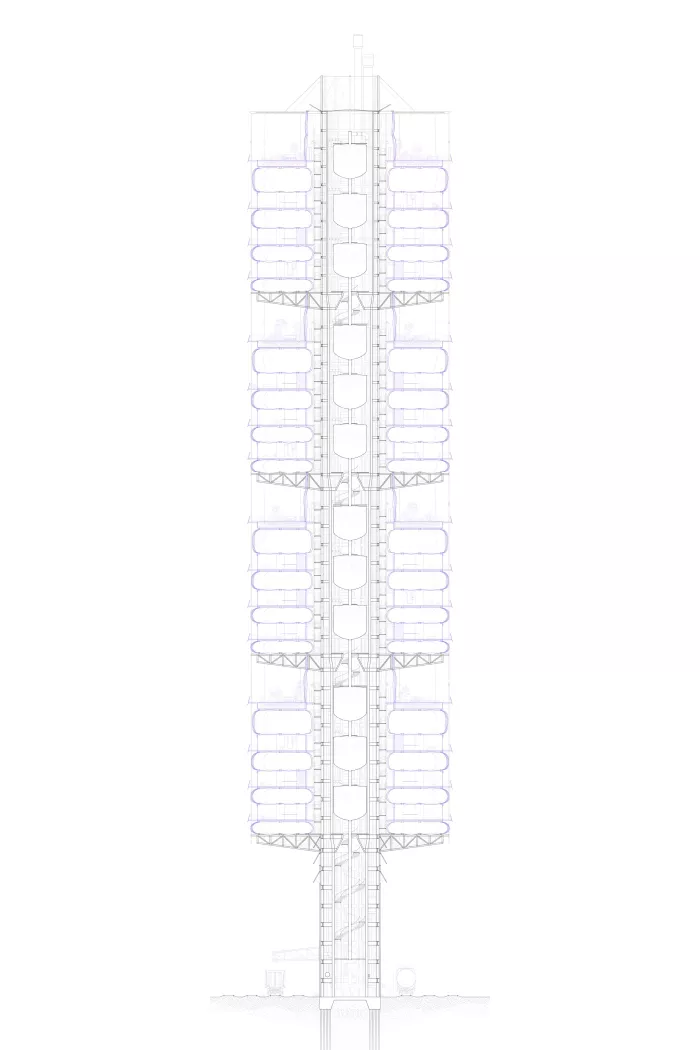
In conceiving buildings as batteries, we initiate a paradigm shift. Energy becomes visible, palpable, no longer an abstract utility but an integral part of daily life. The challenge isn’t scarcity of energy, one hour of sunlight reaching the planet provides enough energy for a whole year of human consumption, but the ability to harvest and most importantly store it. If integrated as a core design principle, architecture becomes a conduit for energy. A house that ascends when energy is abundant, descending as it is consumed. Massive thermal cores that store and release heat, roofs that collect and redistribute water, façades that are both skin and engine. Spaces transform in response to energy levels, making inhabitants acutely aware of consumption and fostering a shared responsibility.
Ice, mud, flywheel, starch, deadweight, wax, vibration, spring, compressed air, resting water, flowing water, acid, bio waste, salt and steam form the field of experimentation.
The semester starts with an intense phase of research that culminates in a collective brunch - each group building a 1:1 battery powerful enough to concoct a dish. Building on the knowledge of this feast, the students scale up the developed energy storage system to the size of a collective housing. The resulting architecture challenges conventional housing typologies, redefines our daily rituals and questions our relationship to energy.
Axel Chevroulet
Florian Jaritz
Lena Kirsch
Anna MacIver-Ek
Sonya Nanami Fritz
Joshua Abdelshahid
Daniel-Marcel Aschenbrenner
Maximilian Atta
Franka Bienstein
Emma Capponi
Anne von Detten
Yorck von Dietze
Emil Dube
Silvester Fornasari
Laurent Fugere
Florence Godin
Stefan Gross
Lukas Grünwald
Helena Haellmigk
Arne Hackmann
Anne Hitchon
Maria Hurtado
Lennart Knoop
Patrick Krienelke
Vincent Kurrle
Charlotte Lavoie
Anna Levedag
Carla Mack
Moritz Maly-Motta
Kian Matine
Florian Meissner
Johanna Müller
Luis Müller
Melanie Neff
Maria Pascal
Leonhard Rechenauer
Katrin Reinhard
Konrad Rinke
Vincent Ritter
Christina Royes
Mara Rüth
Laura Schieferdecker
Bastian Sippl
Amelie Steffen
Jakob Taschner
Paul Volz
Jonas Wald
Felix Waldner
Maja Weidner
Anna Werner-Jones
Technische Universität München TUM
Winter Semester 2024
In an era fixated on Elon Musk’s lithium-ion panacea, sleek batteries forged from rare metals scraped from the ocean floor or extracted from distant, exploited territories, we’ve neglected a simple fact: everything is energy storage. A suspended volume of water, a coiled spring under tension, a mound of salt, all are reservoirs waiting to be tapped. The goddamn potato on your plate is as much a battery as the high-tech cells we covet.
Renewable energies are deemed unreliable because the wind doesn’t always blow, the sun doesn’t always shine, and when it does, we might find ourselves on the wrong side of the planet or beneath a veil of clouds. As architects, we’ve abdicated part of our role, relegating energy to a peripheral concern addressed by engineers and technocrats. We slap solar panels onto facades, plant greenery on rooftops and congratulate ourselves on sustainability. Energy must be reclaimed as the very bones of our buildings, the typological principle around which design revolves.
In conceiving buildings as batteries, we initiate a paradigm shift. Energy becomes visible, palpable, no longer an abstract utility but an integral part of daily life. The challenge isn’t scarcity of energy, one hour of sunlight reaching the planet provides enough energy for a whole year of human consumption, but the ability to harvest and most importantly store it. If integrated as a core design principle, architecture becomes a conduit for energy. A house that ascends when energy is abundant, descending as it is consumed. Massive thermal cores that store and release heat, roofs that collect and redistribute water, façades that are both skin and engine. Spaces transform in response to energy levels, making inhabitants acutely aware of consumption and fostering a shared responsibility.
Ice, mud, flywheel, starch, deadweight, wax, vibration, spring, compressed air, resting water, flowing water, acid, bio waste, salt and steam form the field of experimentation.
The semester starts with an intense phase of research that culminates in a collective brunch - each group building a 1:1 battery powerful enough to concoct a dish. Building on the knowledge of this feast, the students scale up the developed energy storage system to the size of a collective housing. The resulting architecture challenges conventional housing typologies, redefines our daily rituals and questions our relationship to energy.
Axel Chevroulet
Florian Jaritz
Lena Kirsch
Anna MacIver-Ek
Sonya Nanami Fritz
Joshua Abdelshahid
Daniel-Marcel Aschenbrenner
Maximilian Atta
Franka Bienstein
Emma Capponi
Anne von Detten
Yorck von Dietze
Emil Dube
Silvester Fornasari
Laurent Fugere
Florence Godin
Stefan Gross
Lukas Grünwald
Helena Haellmigk
Arne Hackmann
Anne Hitchon
Maria Hurtado
Lennart Knoop
Patrick Krienelke
Vincent Kurrle
Charlotte Lavoie
Anna Levedag
Carla Mack
Moritz Maly-Motta
Kian Matine
Florian Meissner
Johanna Müller
Luis Müller
Melanie Neff
Maria Pascal
Leonhard Rechenauer
Katrin Reinhard
Konrad Rinke
Vincent Ritter
Christina Royes
Mara Rüth
Laura Schieferdecker
Bastian Sippl
Amelie Steffen
Jakob Taschner
Paul Volz
Jonas Wald
Felix Waldner
Maja Weidner
Anna Werner-Jones